

The retail technology landscape is experiencing unprecedented transformation. Consider this: in 2024, U.S. retailers invested $123 billion in technological advancement. Yet, a striking 67% of these initiatives exceeded their timelines or budgets. The primary challenge? Time zone barriers and communication hurdles with development partners.
Let’s explore how nearshore software development addresses these challenges. Picture this: development teams in Mexico, Costa Rica, or Colombia operating in synchronized time zones with the U.S., bringing together technical excellence and deep retail market insights.
Have you ever thought about the complexities retail executives face when selecting nearshore partnerships? Key differences emerge in critical areas: quality assurance protocols, data protection frameworks, and the real-world impact of cultural alignment on project success.
The advantages – and risks – demand strategic foresight. For example, a single checkout system glitch can result in seven-figure revenue losses. Similarly, underperforming mobile applications rapidly drive customers to competitors. In retail tech, excellence isn’t optional – it’s mission-critical.
This comprehensive guide delves into the projected growth of nearshore software development services in retail. We’ll highlight case studies, breakdown cost-benefit comparisons, and explore proven selection frameworks. As demonstrated by industry leaders like Target and Walmart, the future trends point toward nearshore development hubs.
Anticipated developments in the following sections include:
– Cost reduction strategies yielding 40-60% savings
– Project acceleration techniques delivering 30% faster outcomes
– Communication streamlining methodologies
– Advanced data security protocols
– Quality assurance frameworks
This strategic foresight will equip you with concrete, actionable insights for identifying and collaborating with nearshore development teams that truly understand retail technology ecosystems.
Benefits of Nearshore Development for Retail
- Strategic time zone alignment enhances productivity
- Cultural synchronicity drives retail innovation
- Dynamic team adaptation capabilities
Time zone advantages boost collaboration
Nearshore development partners operate in close proximity to your core business operations, eliminating the extensive time gaps typical of offshore arrangements. This strategic positioning enables seamless real-time interaction. Team meetings occur during standard business hours, accelerating decision-making processes. For retail operations, where market dynamics shift rapidly, this enhanced responsiveness provides a competitive edge.
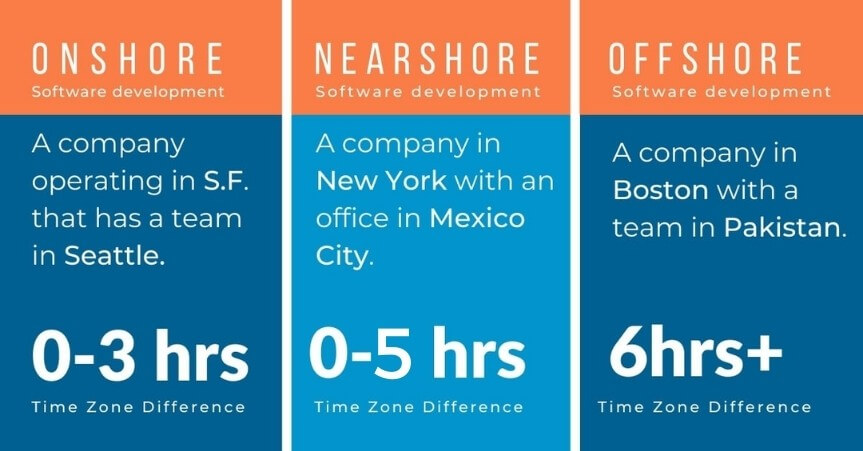
Let’s consider the real-world impact of time zone alignment. Picture a development team in Chicago collaborating with nearshore partners in Colombia – their workdays overlap significantly. Compare this to managing a team in Southeast Asia, where a 12-hour gap creates significant coordination challenges. This time zone advantage transforms how teams interact, fostering an environment where collaborative development thrives and project momentum maintains consistency.
Enhanced market understanding
Geographic proximity naturally cultivates deeper cultural alignment. Consumer behaviors and market trends are heavily influenced by regional perspectives. Nearshore teams demonstrate superior comprehension of these local market dynamics. This insight consistently leads to more targeted product development and enhanced customer experience strategies.
Consider this: how many retail initiatives have faltered due to disconnects between development teams and target audiences? When building retail software, where consumer preferences drive innovation, such misalignments can prove costly. Having a development partner who inherently understands your market’s pulse helps anticipate and address potential challenges before they impact your bottom line.
Adaptive market response
Today’s retail landscape demands unprecedented agility. Nearshore partnerships excel in providing rapid scalability, allowing swift adaptation to market shifts. Whether you’re expanding your development capacity or pivoting to capture emerging opportunities, nearshore teams offer remarkable flexibility. While offshore alternatives might present attractive cost structures, their extended communication cycles often result in delayed market responses.
Future trends indicate that market responsiveness will become increasingly crucial. As illustrated by real-world scenarios, businesses that can’t adapt quickly risk losing market share. Strategic foresight suggests that the ability to implement rapid changes will define successful retail operations in the coming years. This adaptability represents a key advantage of nearshore partnerships.
What is nearshore software development?
Nearshore software development involves partnering with development teams in neighboring countries, striking an optimal balance between cost-effectiveness and operational efficiency. This approach differs from traditional outsourcing by prioritizing geographical and cultural proximity. A nearshore partner functions similarly to a domestic provider but operates from a nearby nation.
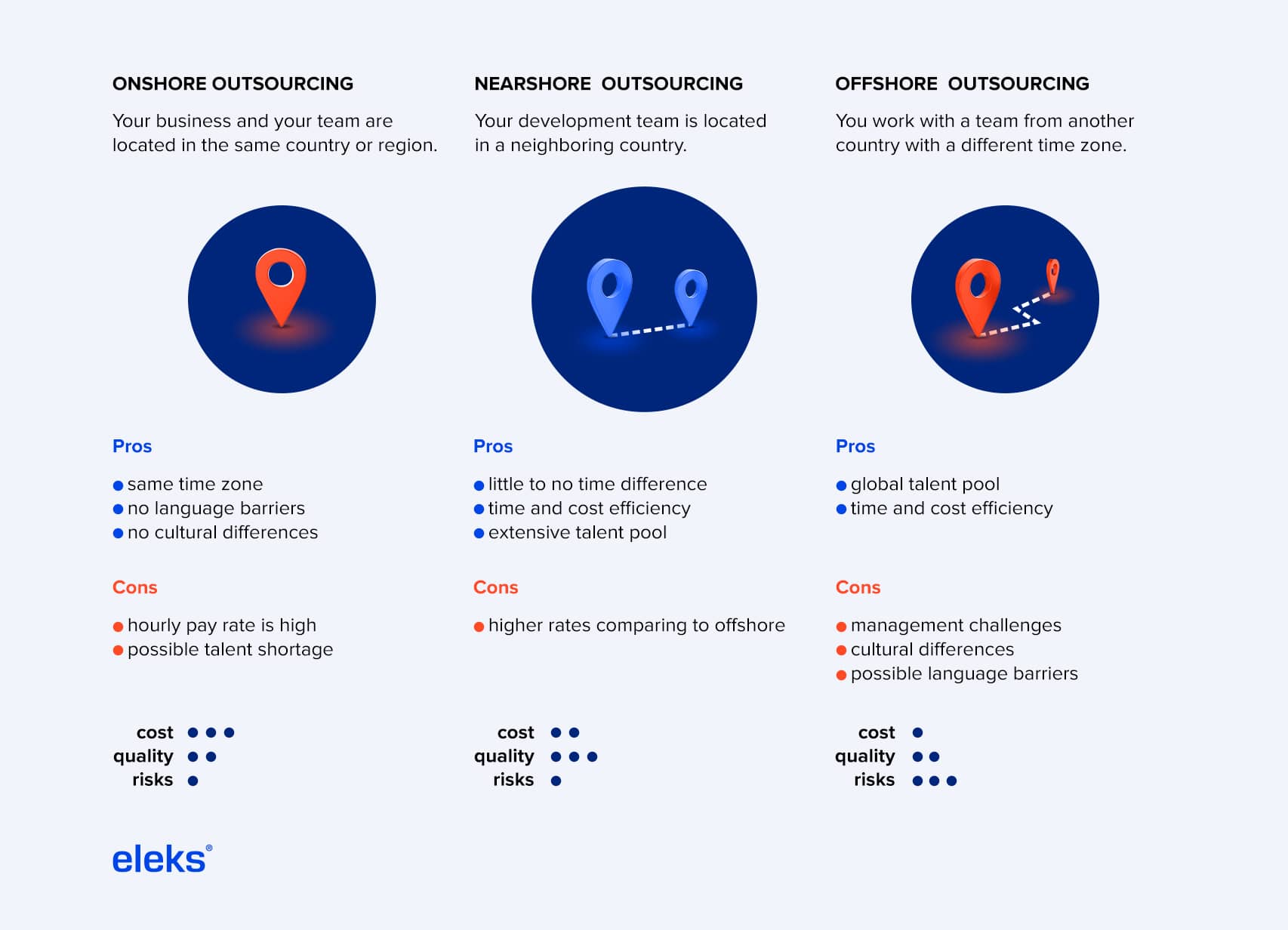
For example, consider a U.S. retailer collaborating with a Costa Rican development team. The advantages become clear when comparing this arrangement with traditional offshore partnerships in distant regions. While offshore development might offer certain cost advantages, the projected growth in nearshore partnerships highlights the increasing value placed on operational alignment and cultural affinity.
Strategic scaling capabilities
Nearshore partnerships offer unparalleled flexibility in project management, particularly crucial in retail’s dynamic environment. As demonstrated by successful implementations, these arrangements allow for rapid resource allocation when new opportunities arise. The minimal time difference facilitates smooth scaling operations, enabling retail businesses to expand their capabilities without extensive delays or operational disruptions.
This strategic advantage becomes increasingly valuable as retail technology evolves. Case studies have shown that businesses leveraging nearshore partnerships can better navigate market fluctuations and technological shifts. The long-term benefits extend beyond immediate cost savings, creating sustainable competitive advantages in an increasingly digital retail landscape.
Choosing Nearshore Software Development Providers
Tips for evaluating potential providers
Let’s explore the critical aspects of evaluating nearshore software development providers. Picture this: you’re examining the technical prowess of potential partners. Case studies and past implementations become your compass. For instance, a provider’s successful deployment of complex retail solutions signals deep technical competence. Consider this scenario – if your retail operation relies heavily on cloud-based inventory management, look for providers with proven experience in similar implementations. Real-world scenarios often emerge through platforms like Clutch or G2, offering valuable insights into provider performance.
Strategic foresight in industry-specific experience can’t be overlooked. A provider well-versed in retail understands the nuances of peak shopping seasons, inventory management, and customer behavior patterns. This expertise translates into meaningful advantages for your project. They’ll anticipate challenges unique to retail, such as handling high-volume transactions during holiday seasons or implementing sophisticated loyalty programs that drive customer retention.
Importance of establishing clear goals and expectations
Breaking down project objectives and expectations is crucial for success. Have you ever thought about how misaligned expectations can derail even the most promising projects? Start by creating detailed project roadmaps with specific deliverables and deadlines. Long-term success depends on establishing clear communication channels and decision-making protocols from day one.
Projected growth and scaling requirements should influence your pricing discussions. A breakdown of different pricing models – from fixed-price to time-and-materials – reveals distinct advantages and disadvantages. Strategic foresight in budget planning should account for potential platform upgrades, maintenance costs, and scalability requirements. This comprehensive approach helps prevent unexpected financial challenges while fostering a transparent partnership.
Understanding nearshore outsourcing
Nearshore partnerships, illustrated by collaboration between U.S. companies and Colombian development teams, offer unique advantages in today’s digital landscape. You may wonder about the comparison between nearshoring and traditional outsourcing models. The key differences lie in geographical proximity, which facilitates real-time collaboration and cultural alignment. This approach brings together cost efficiency with operational effectiveness.
For retail operations, the advantages of nearshore outsourcing are particularly compelling. As highlighted by industry expert Kevin Parikh, CEO of Avasant, nearshoring represents more than cost optimization – it’s about building strategic partnerships. This perspective underscores how retail businesses can maintain stronger operational control while leveraging cost advantages.
Further reading and resources
Delve into comprehensive resources to enhance your understanding of nearshore partnerships. “The Outsourcing Revolution” by Michael Corbett offers strategic insights into managing successful outsourcing relationships, particularly valuable for retail technology initiatives.
Industry analysis from McKinsey delivers cutting-edge perspectives on global outsourcing trends, with particular emphasis on retail technology evolution. Leveraging these resources creates a solid foundation for making informed nearshore partnership decisions.
Cost-Effectiveness of Nearshore Development in Retail
Comparative Cost Analysis with Offshore and Onshore Options
Let’s explore how nearshore development presents a strategic middle ground in software development. As demonstrated by market trends, labor costs position themselves between premium onshore rates and budget offshore options, creating an appealing value proposition when weighing investment against deliverables.
| Comparison | Onshore | Nearshore | Offshore |
|---|---|---|---|
| Labor Cost | High | Medium | Low |
| Quality of Work | High | High | Variable |
Case studies have consistently shown that nearshore teams maintain exceptional quality standards, justifying the moderate cost premium over offshore alternatives.
Impact of Reduced Travel Expenses
Picture this: Your team needs face-to-face collaboration. The proximity advantage of nearshore locations translates into substantial travel savings. Have you ever thought about the cumulative cost of multiple long-distance flights to offshore locations? Nearshore alternatives eliminate this burden.
Real-world scenarios prove that accessible meeting opportunities foster stronger partnerships while keeping operational expenses in check.
Enhanced ROI Through Quality Improvements
Consider this breakdown of how nearshore development amplifies return on investment through strategic foresight and excellence in execution. The anticipated developments include streamlined maintenance and enhanced market positioning.
| Benefit | Nearshore Effect |
|---|---|
| Post-Launch Fixes | Fewer due to higher initial quality |
| Competitive Edge | Maintained through consistent quality |
Future trends indicate that nearshore projects, while requiring more upfront capital, generate long-term savings through reduced maintenance requirements and fewer post-deployment modifications.
Highlighting the advantages of balanced cost-quality dynamics, nearshore development emerges as the more strategic choice compared to offshore alternatives. Key differences in quality assurance and geographical accessibility position nearshore as the frontrunner in cost-effectiveness calculations.
Nearshore vs Offshore Software Development for Retail
Key differences in scaling and adapting to market
Let’s explore how nearshore development demonstrates superior responsiveness in today’s retail landscape. Real-world scenarios highlight how geographical proximity enables teams to implement changes rapidly. Our case studies have consistently shown nearshore teams delivering adaptations within the same business day, providing concrete advantages in fast-moving retail environments.
| Feature | Nearshore | Offshore |
|---|---|---|
| Reaction Speed | Fast | Slower |
| Adaptability | High | Moderate to Low |
Consider this: while offshore development offers certain benefits, strategic foresight reveals significant challenges in rapid adjustments. The anticipated developments in retail demand quick pivots – something offshore teams struggle with due to time zone barriers. Our long-term analysis indicates offshore partnerships frequently require extended periods to synchronize with retail market dynamics.
Security and data protection considerations
As demonstrated by current trends, nearshore teams excel in maintaining regulatory alignment. This advantage becomes particularly crucial when handling sensitive retail data. Future trends point to increasingly stringent data protection requirements, where nearshore providers consistently showcase superior compliance capabilities.
| Feature | Nearshore | Offshore |
|---|---|---|
| Legislative Compliance | Aligned | Variable |
| Data Protection | Reliable | Uncertain |
The breakdown of offshore compliance presents notable disadvantages. Different regulatory frameworks can create unexpected challenges, and our projected growth analysis indicates these disparities may widen. Comparative studies show offshore providers often struggling to maintain consistent alignment with domestic security standards.
Understanding Other Development Approaches
1. Definition of Onshore Software Development
Onshore software development represents a strategic approach where companies engage development teams within their national borders. This model excels in delivering real-time collaboration through shared cultural context and immediate communication channels. As demonstrated by industry trends, onshore development minimizes miscommunication risks and accelerates decision-making processes. The key trade-off lies in the financial investment required, as domestic operational costs and talent compensation typically exceed international alternatives.
Consider this: regulated industries like healthcare and government sectors frequently leverage onshore development. For example, federal infrastructure projects prioritize domestic teams to ensure adherence to stringent security protocols and regulatory frameworks. This approach provides enhanced control over data sovereignty and compliance measures.
Action Items:
– Conduct a comprehensive cost-benefit analysis for onshore development feasibility.
– Map out project requirements against communication-critical milestones.
2. How to Outsource Software Development?
Let’s explore the strategic framework for successful software development outsourcing. The journey begins with precise project scope definition, outlining strategic objectives and expected deliverables. Following this, strategic foresight in partner selection involves evaluating technical expertise, portfolio strength, and organizational compatibility. Contract negotiation encompasses milestone planning, deliverable specifications, and resource allocation. Establishing robust communication protocols ensures seamless collaboration throughout the development lifecycle. Regular performance monitoring and feedback integration maintain project trajectory and quality standards.
Long-term success in outsourcing partnerships hinges on established documentation practices, clear expectations, and strategic alignment. While cost efficiency drives many outsourcing decisions, the focus should remain on value creation and quality assurance.
Action Items:
- Develop comprehensive project roadmap with measurable milestones.
- Create a strategic vendor evaluation matrix based on demonstrated capabilities.
3. Key Terms to Know in Development Outsourcing
Future trends in software development outsourcing demand a solid grasp of industry terminology. The landscape encompasses various engagement models: “onshore” development utilizes domestic talent pools, “nearshore” leverages geographical proximity advantages, and “offshore” explores global talent markets across time zones. Mastering contemporary development methodologies, including agile frameworks, scrum principles, and DevOps practices, enhances project communication and execution.
This terminology breakdown facilitates strategic decision-making in outsourcing initiatives. It enables precise cost-benefit evaluations and strengthens stakeholder communications throughout the project lifecycle.
Action Items:
- Establish a comprehensive glossary of industry-specific terminology for team reference.
- Analyze case studies highlighting successful implementations of each outsourcing model.
[Dive Deeper]
- “The Lean Startup” by Eric Ries
These insights illuminate the diverse landscape of development approaches, empowering informed decisions in software development initiatives.
Checking Out
Nearshore software development emerges as a strategic solution for retail businesses aiming to maintain their competitive edge in 2025 and beyond. As demonstrated by real-world scenarios, this approach delivers an optimal balance of cost-effectiveness and premium deliverables, making it a compelling choice for organizations seeking reliable software solutions.
The advantages of nearshore development in retail are highlighted by concrete results. Consider this: synchronized time zones foster seamless collaboration, while deep cultural affinity drives the creation of more targeted products. Strategic foresight becomes crucial as retail markets evolve, and nearshore teams demonstrate exceptional agility in adapting to anticipated developments.
For retail decision-makers exploring development options, let’s delve into a practical breakdown. Start by establishing long-term objectives, assess your technical requirements, and partner with teams possessing proven retail expertise. The right strategic alignment will not only optimize costs but also amplify operational outcomes.
Future trends in retail software development success hinge on forging intelligent partnerships. Projected growth patterns through 2025 indicate that nearshore solutions will equip retail enterprises with essential capabilities while maintaining cost efficiency. This approach enables close collaboration, rapid response times, and precise alignment with customer demands.
The key differences between nearshore, offshore, and onshore options warrant careful consideration based on your unique requirements. However, nearshore development stands out by offering a compelling blend of value, excellence, and enhanced communication. For retail enterprises positioned for expansion, the pathway to innovation beckons.